VB: Clark Brothers Orchards

Owner and farmer Dana Clark, top, and farmer and daughter Naomi Clark at Clark Brothers Orchards in Ashfield.
Dana Clark is a fourth-generation farmer, who owns and operates Clark Brothers Orchards in Ashfield, along with his brothers, Aaron and Brian Clark. Dana’s children, Naomi and Silas, along with Naomi’s husband, Craig, comprise the fifth generation of Clarks growing fruit in Apple Valley.
Dana Clark explains that his great grandfather bought the land in 1886. He says, “The lore is that there was a peddler who moved from town to town, and he named it ‘Apple Valley’ for the eight or nine apple orchards operating here at the time.”
In 1982 Dana Clark travelled to Europe and was inspired by farmers planting smaller trees while increasing fruit yields. “This began a quest to learn how to get the highest density of trees,” he adds. “My great-grandfather planted 40 trees to an acre; we got that to 2400 [dwarf] trees to an acre,” says Clark.

Keith Zorn prunes apple trees
Commercial apple trees start with root stock, then a cutting or bud (scion) from another variety is grafted to it. The root stock may be chosen for the ultimate size of the tree, adaptability to climate or soil, or its resistance to pests and disease. The scion may be chosen from varieties that produce fruit of various colors or flavor profiles.
Clark Brothers Orchards buys from a nursery that handles grafting for them. Dana Clark notes, “Dwarfing root

Honeycrisp apples
stock puts more energy into the scion—the variety you put on the root—and producing fruit, instead of producing wood. Young trees planted on the farm are trellised, making them easier to work on. These trees require fewer inputs and yield higher quality fruit.”
He continues, “With the old standards, you’d plant a tree, and fifteen years later, you’d be picking apples. With the dwarf trees, they produce the first year, but you want to let them grow for two-to-three years. You want them to fill their space before letting them fruit. Trees that are ten feet tall can produce bushels of fruit per acre,” says Clark.
The quest for great tasting, visually pleasing apples leads growers like the Clarks to try new varieties as they become available. The farm grows 28 varieties of apples. The orchard sells beloved varieties both on their farm stand and to their wholesale customers, including Honeycrisp, Macoun, McIntosh, Cortland, Gala, EverCrisp®. Ludacrisp® is a new variety of red-yellow apple. Clark says, “They’re not the most physically attractive apple, but the eating quality is unsurpassed. It’s very crisp and won’t get soft if you put it in a bowl on your table.”

A Honeycrisp apple
The farm grows other new varieties to sell on their farm stand. It can take many seasons before homing in on new varieties that suit the wholesale market. Clark notes, “It’s difficult to introduce a new variety to the wholesale market. You need critical mass to introduce a new variety.”
Perhaps more important than the varieties grown in the orchard is the way farmers manage their trees. Today, the farm spans approximately 450 acres, with 65 acres growing apples. The rest of the land is pasture, hay, and woods—important habitat for native pollinators. Clark explains, “We don’t bring in European bees to our orchard. We’re totally dependent upon local, native bees, and so we’re very careful about what we do to preserve them. One of the reasons we have an abundance of native pollinators is that we have a lot of woods.”
Over the last 45 years that Dana Clark has been growing apples, the family has leaned into practices that  promote healthy soil, foster biodiversity, and conserve water on their farm. The farm is Eco Apple Certified, a program that Clark describes as “a step beyond IPM (Integrated Pest Management) for the Northeast.”
Using Eco Apple protocols, the Clarks manage current crops with an eye to the long term. Clark says, “We’re very careful about impact on aquatic and human considerations. The approach is expensive and very specific.” The farm hires a professional each year to monitor the trees with traps to identify and contain any pest or disease pressure. He continues, “We do not spray on a calendar basis. We only do what we need to address a problem.”
Clark has observed warmer weather and more intense storms over the years. He says, “Climate change is so clear on the farm. The first frost used to be the first or second week of September. Now, it’s more like the second week of October. This brings pests we’ve never seen before that come up from the south. When I was in school, we never could have grown varieties like EverCrisp® here,” he says.
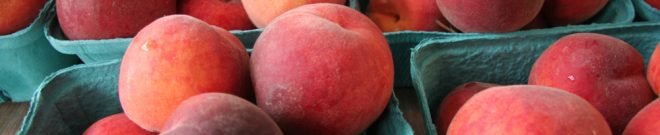
Capitalizing on warmer weather, Clark Brothers Orchards also grows peaches, blueberries and grapes. Naomi Clark explains that they grow eight varieties of grapes, two of which they sell wholesale. She says, “Our grapes are delicious. They are the best table grapes you’ll ever have—you’ll never want a California grape ever again.” The grape harvest continues through October.

Owner and farmer Dana Clark drives a tractor at Clark Brothers Orchards
In the end, Clark Brothers Orchards is a story about love: for family, for the land and for a very special way of life. Dana Clark concludes, “It’s a beautiful valley, and we have a wonderful heritage. I walk the land my great-grandfather walked. It’s not easy to farm and pass it through generations. My kids could have an easier life and make more money elsewhere, but they chose to farm. Supporting local food is really, really important.”
Naomi Clark acknowledges that retail customers are also part of the farm. She says, “I want people to understand we do this because we love it. We love our farm and appreciate their support.”
Clark Brothers Orchards is located at 580 Apple Valley Road in Ashfield. Their farm stand is self-serve, and is

Craig Clark prunes apple trees
open from 8am to sundown, Sunday to Friday. They are closed on Saturdays. They accept cash, checks, PayPal & Venmo. For more information, see their website at clarkbrothersorchards.com.
Lisa Goodrich is a Communications Coordinator for Community Involved in Sustaining Agriculture (CISA). To find fruit farms near you, see CISA’s online guide at buylocalfood.org.
Photos by Daniel Jacobi II courtesy of the Daily Hampshire Gazette.